
India Inc's quarterly net profit reached a record high of Rs 1.64 trillion in the third quarter ended December 31, 2020, mainly due to gains from higher commodity prices and a big swing in banks' earnings. The combined net profit of 3,323 listed companies that have declared results so far was up 68.6 per cent year-on-year (YoY). In comparison, earnings were up six times (534 per cent) in the second quarter and 6.5 per cent in the corresponding period last year.

Operationalising the ban is being fleshed out: it will entail which cryptocurrencies will be banned and how.

The combined net sales of 42 listed construction and capital goods companies that have declared their third-quarter results so far were down 2.3 per cent year-on-year in Q3FY21 while core operating profit was up just 4.9 per cent YoY during the quarter.

The government has revised its divestment target downwards from Rs 2.1 trillion, as its ambitious privatisation programme has been deferred to next year.

The government is set to divest its shareholdings in defence PSUs, Garden Reach Shipbuilders & Engineers Ltd and Mishra Dhatu Nigam Ltd (MIDHANI). It will also divest its shareholding in BEML Limited, said Shripad Naik. Minister of State for Defence, on Monday. The government has invited preliminary bids to sell its 26 per cent stake in BEML along with transfer of management control.

The Reserve Bank of India has issued several warnings that the public should not fall prey to such unscrupulous activities and verify the companies offering loans online and through apps.

The department of investment and public asset management (Dipam) can also seek in-principle approval from the Cabinet Committee on Economic Affairs (CCEA) for strategic divestment of PSUs on a case-to-case basis considering investor appetite and sectoral trends.

Market cap of government companies has remained unchanged in the past 8 years.

The policy was part of the Aatmanirbhar Bharat package announced by Sitharaman in May 2020 as a coherent policy where all sectors would be opened for private sector participation.

RRBs were formed under an Act to provide credit to small farmers, agricultural labourers and businesses in rural areas.

State-owned companies have been set stiff targets to increase accountability as they get ready for divestment. Nikunj Ohri explains why meeting them will be challenging.

BSE-listed companies' market capitalisation reached Rs 197.7 trillion on January 21, against India's nominal GDP of Rs 190 trillion during 12 months ended December 2020.

Industry players believe the new DFI model will be initially risk capital, which will then be used to mobilise additional resources from development agencies such as World Bank.

Over the three-month period, Airtel's stock price has rallied from Rs 432 to Rs 540, while Vodafone Idea has risen from Rs 9.2 to Rs 11.8 per share.
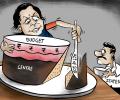
It is estimating that this would help monetise assets worth Rs 10,000 crore.

This is first time in 25 years that a benchmark equity index in India is trading at a P/E multiple of 40x or higher.

Tata Sons stake in the group's listed companies is now worth Rs 9.28 trillion, up 34.4 per cent on a year-on-year (YoY) basis. In comparison, the Government of India's stake in listed central public sector undertakings (PSUs) is currently valued at Rs 9.24 trillion

More people seemed to be returning to their workplaces towards the end of the year, even as railway and electricity numbers disappointed. Most other indicators held on to their gains.
About 50 per cent of the accounts that availed of the EMI moratorium amid the pandemic, which made things worse in an already slowing economy, are expected to be restructured, and of these accounts that would undergo restructuring, one-third, or Rs 6-9 trillion, could turn into NPAs.

The growth was led by family-owned companies and business groups with presence in pharmaceuticals, information technology services, and consumer products.
 © 2026 Rediff.com - Investor Information - Advertise with us - Disclaimer - Privacy Policy - Sitemap - Feedback - About us - Terms of use - Grievances